
Mixed up
One tool for many customers, with no clean separation between their data.
IT OPERATIONS
Unified360IT operations & observability platformNetwork TopologyAuto-discovered mapsLink UtilizationBandwidth and link qualityBusiness Service ManagementApplications, services and impactIPAMSubnets, IPs and conflictsAlerting & EscalationDetect, notify, recoverSERVICE & ASSETS
ITDeskIT service management platformIncidents & SLAsOne desk for every requestIntelliAssetIT asset & patch managementPatch ManagementDetect, deploy, roll backISMS Audit PackISO 27001 evidence, readyBY CHALLENGE
Blind Spots in InfrastructureNo extra tools: hardware to URLs on one screenSlow Ticket ResolutionRoute, watch and escalate to fix fasterUnknown Assets & Unpatched SystemsKnow what you own, patch what's exposedUncontrolled Privileged AccessVault, approve, record and auditManual, Repetitive OperationsAutomate approvals and remediationAudit & Compliance PressureEvidence on demandBY STACK
Networks & WirelessSwitches, firewalls and controllersServers & DatabasesWindows, Linux and leading databasesVirtual & Hybrid EstatesHypervisors and hybrid workloadsEndpoints & DevicesAgent-based inventory and updatesRemote & Privileged SessionsAgentless SSH, RDP and VNCTools & IntegrationsITSM, SIEM, webhooks and emailLEARN
Quick Start GuidesSoonGet productive with any Autointelli product in minutes.Product DocumentationAdmin manuals, how-tos and API references.Integration CatalogSoonWhat Autointelli connects to, and how.IT Terms ExplainedPlain-language definitions of everyday IT jargon.DISCOVER
Customer StoriesHow organisations get measurable results.WhitepapersResearch on IT operations, ITSM, ITAM and PAM.Ebooks & PlaybooksPractical, step-by-step operating guides.Product DatasheetsCapabilities and technical specifications.Why AutointelliHow we differ from other platforms.Compare AutointelliSide-by-side with tools you may be weighing.Solution · By Sector
Providers need one console for many customers without letting them see each other. Unified360 is built multi-tenant: every target, rule, contact, dashboard and report belongs to a customer, and customer-scoped users see only their own, while your team sees them all.
The problem
The economics need one platform, and the contracts need strict separation.
One tool for many customers, with no clean separation between their data.
Customer sites reach you over links you can't see into.
Technicians touch customer systems, and you must show who did what.
Where it goes wrong
How it goes wrongData from different customers sits together.
Closed withEvery resource is scoped to a customer, with per-customer views and a customer-locked filter for scoped users.
How it goes wrongA carrier disputes an outage and you have no data.
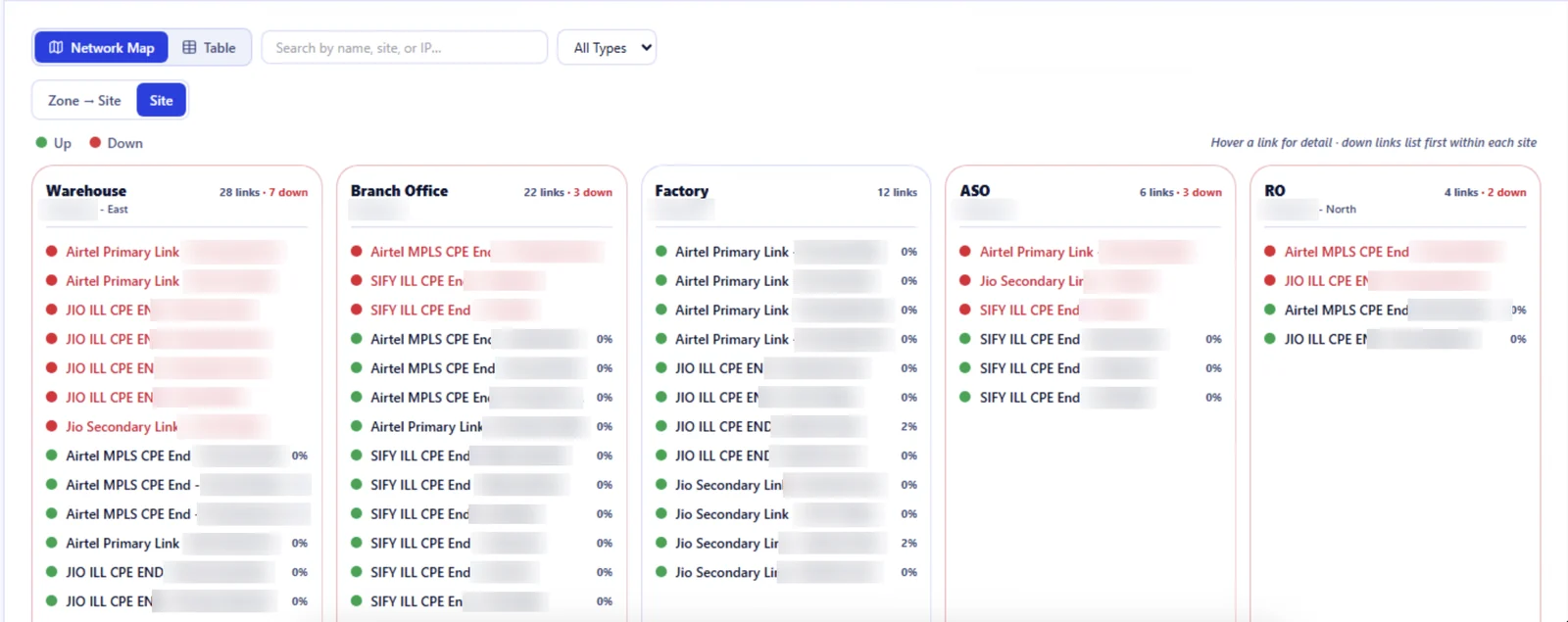
Closed withLink monitoring with circuit ID, vendor, provisioned bandwidth and committed uptime.
How it goes wrongCustomer sites sit behind their own firewalls.
Closed withProxy servers and site agents report into one console.
How it goes wrongVendor delays are handled by email.
Closed withITDesk vendor escalation with acknowledge and resolve tracking, and contract management with expiry alerts.
How it goes wrongShared credentials on customer systems.
Closed withSecurita360: vault, approvals, command control and recorded sessions.
How it goes wrongMonthly customer reports built from exports.
Closed withScheduled reports in PDF, per customer, with a customer filter on dashboards and reports.
Provider types
Pick a provider type to see what it typically needs and which capabilities match.
Hosting compute for customers.
Running customers' IT for them.
Circuits, backbone and customer edge.
Capabilities listed are what the products do today. No provider customers are named on this page.
What changes
Data is scoped to each customer, and users see only theirs.
Measured quality sits beside the committed uptime.
Every technician session is approved and recorded.
Per-customer reports arrive without manual exports.
Built with
Operations and observability
Infrastructure, network, application and database monitoring, with multi-tenant scoping.
IT service management
Incidents, requests, SLAs, approvals and vendor management.
Asset and patch management
Inventory, patching, lifecycle and audit-ready reporting.
Privileged access management
Vault, just-in-time access, recorded sessions and audit trail.
Questions
Every monitoring target, alert rule, contact, dashboard and report belongs to a customer. Customer-scoped users see only their own customer's data, and the filter is locked. Admins without a customer assignment can see every tenant.
Customer-scoped users can be given roles that limit them to their own customer's data and views.
A monitoring agent at the site collects data and proxy servers report it back to one console.
Yes. Link monitoring records circuit ID, vendor, provisioned bandwidth and committed uptime, and measures latency, jitter, loss and utilization.
No. Billing and quoting aren't part of the products today.
No provider customers are named here. This page describes what the products do.
See it for your services
Tell us how you serve customers and we'll show you how the platforms fit. No commitment required.